
"located in Arabia"
500 article(s) found

A brief Analysis of the characteristics of Yunnan small Coffee is the flavor of Katim coffee beans really bad?
Professional coffee knowledge exchange more coffee bean information please follow the coffee workshop (Wechat official account cafe_style) Qianjie-Yunnan coffee variety introduction Arabica coffee (Arabica coffee), also known as small grain coffee. Derived from the wild coffee produced in Africa, it was later introduced into Europe through Arabia and got its name. It was introduced into Zhu Kula, Binchuan County, Dali, China in the 1890s.

What do you recommend in Latin American coffee producing areas? how much is a cup of Latin American coffee?
Professional coffee knowledge exchange more coffee bean information please follow the coffee workshop (Wechat official account cafe_style) in terms of production, coffee beans in Latin America account for about 60% of the world's coffee production, Africa and Arabia account for about 20%, and the remaining 20% are distributed in Asian countries and islands. In South America, Brazil accounts for 30-50% of the world's output, Goran.

El Salvador Himalayan Coffee Flavor description Fine Coffee characteristics Manor introduction
The latest government of El Salvador was formed in June 2014. The main cabinet members are Vice President Oscar Ortiz (Oscar Ortiz), Foreign Minister Hugo Rohr Martinez Bonillia (Hugo Roger Martnez Bonilla), Finance Minister Carlos Caceres (Carlos Cceres), and Minister of economy Tasi Salomon Lopez (Tharsis Salomn).
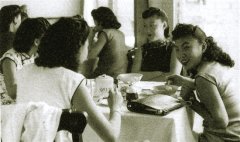
The first cafe in China appeared in Guangzhou. Lu Xun doesn't really like coffee.
Communication of professional baristas Please follow the girls of the Republic of China who drink coffee in the coffee workshop (Wechat official account cafe_style) A silver coffee pot made for export in China at the end of the Qing Dynasty. The coffee mugs of the last years of the Republic of China are printed with the head of the Queen of England and the advertising of canned coffee during the period of the Republic of China. Today, let's talk about coffee, a petty-bourgeois drink popular all over the world. There are not many drinks popular all over the world.

Yemeni Coffee | Coffee beans from Yemen what coffee comes from Yemen?
Yemeni coffee beans Yemen is located in the mountains of the central to southern Arabian Peninsula, near the Red Sea. Yemeni coffee production in the region is still growing, but has fallen sharply from its peak. Terraces are carved on the mountains, just like rice paddies and vineyards in other countries, so that they can be easily pruned and harvested, looking like a huge, carefully trimmed manor. Summer

The growing process of coffee beans the growing conditions of coffee beans
At present, coffee trees are mainly planted in Arabica, Robusta and Liberia. Arabica species produced in Elaraby Sinia (now Ethiopia) have the highest quality of the three major tree species, accounting for 2/3 of the world's coffee production. Coffee beans are oval and flat, characterized by fragrance and good quality. Robusta seeds are produced in Congo, Africa, with strong disease resistance, high temperature resistance and fruit.

Coffee Xiaobai classroom, how much do you know about coffee beans?
The history of coffee beans first tell you the historical story of coffee beans. Legend has it that around the tenth century AD, on the Ethiopian plateau of Africa, a shepherd Carl found sheep excited after eating some kind of red fruit. As a result, Carl distributed this incredible red fruit to the locals, and its magical effect spread. Picture: coffee tree

Tanzania coffee with pure flavor Taste Manor Features Boutique coffee Introduction
Tanzania is one of the cradles of ancient man. BC with Arabia, Persia and India and other places have trade. In the 7th and 8th centuries, Arabs and Persians moved in in large numbers. The Arabs established the Islamic Kingdom at the end of the 10th century, and the Persians established the Sangi Empire on the eastern coast of the continent and Zanzibar. [3]1886 Tanganyika interior is transferred to German sphere of influence, 19

El Salvador Coffee producing area introduces Santa Ana Volcano area
Pacamara bean shape is too large, in the treatment field for peeling and separation, often stuck in the holes or gaps of the machine, the machine must be adjusted from time to time to deal with separately. Due to the limited initial output of Pacamara and the rare fruits of large seeds in sa, most washing plants lack experience in dealing with large coffee fruits, not to mention extra sieves with larger mesh to specially deal with Pacamara species.

Interpretation of the flavor characteristics of individual coffee beans from all over the world
Coffee trees grow in tropical or subtropical agricultural gardens centered around the equator and called coffee belts. In addition, growing coffee also requires daylight and proper shade, which is most suitable for planting on fertile soil or volcanic ash soil. Therefore, the origin of coffee is widely distributed in South America, Central America, the West Indies, Asia, Africa, Arabia, the South Pacific and Oceania. If not

Nicaraguan coffee characteristics, uses, coffee producing area & output, general situation of coffee production and marketing over the years
For the exchange of professional baristas, please follow the coffee workshop (Wechat official account cafe_style) the Republic of Nicaragua is the largest country in Central America, covering an area of 130000 1670 square kilometers. It is bordered by Honduras to the north, Costa Rica to the south, the Caribbean Sea to the east and the Pacific Ocean to the west, between latitudes 11 and 15 degrees north. The country is divided into three major geographical regions, namely, the central isthmus and the Pacific Ocean.

The Origin of Mysore Nuggets Extra Bold of Moka seed Maisuo Gold Brick in Maiso producing area of India
Exchange of professional baristas Please follow the coffee workshop (Wechat official account cafe_style) Coffee in India: the early Arab autocratic coffee cultivation and marketing, coffee sold to Europe are the only monopoly, coffee seeds and saplings are extremely strict control. In 1670, an Indian Muslim practitioner, Baba Budan, made a pilgrimage to Mecca, Arabia. He was in Moka, Yemen.

Coffee Learning: the History, legends and stories of Coffee
The early historical records of coffee are almost zero, so those are the stories that modern people know. As for what the facts are, there is no way to know. But we can also make some guesses about those legends, after all, this is almost the only way to know and explore the truth now. We can understand the history of coffee from several aspects.

Strong aroma of Tanzanian coffee flavor taste manor boutique coffee beans introduction
Tanzania is one of the birthplaces of ancient humans. BC had trade with Arabia, Persia, India and other places. In the 7th and 8th century, Arabs and Persians immigrated in large numbers. The Arabs established the Islamic kingdom at the end of the 10th century, and the Persians established the Zanzibar empire on the eastern coast of the mainland. [3] in 1886 Tanganyika inland was placed under the German sphere of influence, 19

Yemen is located in the Asian continent of the Arabian Peninsula African coffee flavor single product
Yemeni (Yemen) aroma 4, brightness 4, mellow, 3 flavors, 4.5 aftertaste, 5 points suitable for baking: City/Full city from city to full city is suitable, light baking will highlight the western flavor and spice, while deeper baking will make dark chocolate and smoky taste obvious, at the same time, the taste will be more intense. It should be noted that because the beans are relatively small, plus the size of the particles is quite large.

Introduction of coffee producing countries in Africa-introduction of coffee producing areas in Ethiopia, Kenya and Yemen
Africa is the third largest coffee producer in the world, after South America and Asia. Ethiopia, Kenya and Yemen are the main coffee products in Africa. Ethiopia is the largest Arabica producer in Africa, followed by Kenya. Yemeni coffee production, which monopolized the global coffee market before the 18th century, is declining year by year and is about to disappear from the coffee map. First of all, let's talk about

High quality Sanrita estate coffee beans grinding degree roasting degree processing method
Growing coffee also requires sunlight and proper shade, and is best done on fertile or volcanic ash soil. Therefore, coffee is widely distributed in South America, Central America, West Indies, Asia, Africa, Arabia, South Pacific and Oceania. Ethiopia and Tanzania in Africa, Brazil, Colombia, Jamaica, Guatemala and Mexico in Central and South America
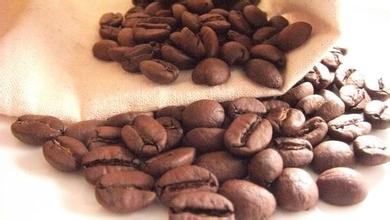
Panamanian coffee taste price coffee bean type coffee bean
The history of coffee beans first tell you the historical story of coffee beans. Legend has it that around the tenth century AD, on the Ethiopian plateau of Africa, a shepherd Carl found sheep excited after eating some kind of red fruit. As a result, Carl distributed this incredible red fruit to the locals, and its magical effect spread. Picture: coffee tree

Flavor and taste characteristics of El Salvador boutique coffee manor
In 1998, El Salvador had a total population of 6.1 million (estimated), of which El Salvador, an Indo-European hybrid, accounted for 89 per cent, 10 per cent of Indians and 1 per cent of whites. In 2012, El Salvador had a total population of 6.090646 million, of which 90% were of mixed Indo-European race, 9% of whites, 1% of Indians, 29.7% of people aged 15 to 64, 29.7% of people aged 15 to 64, 6.6% of them aged 65 and above.